
Return to blog
Commercial
Condominium Association: How to Properly Manage Move-Ins and Protect Your Building
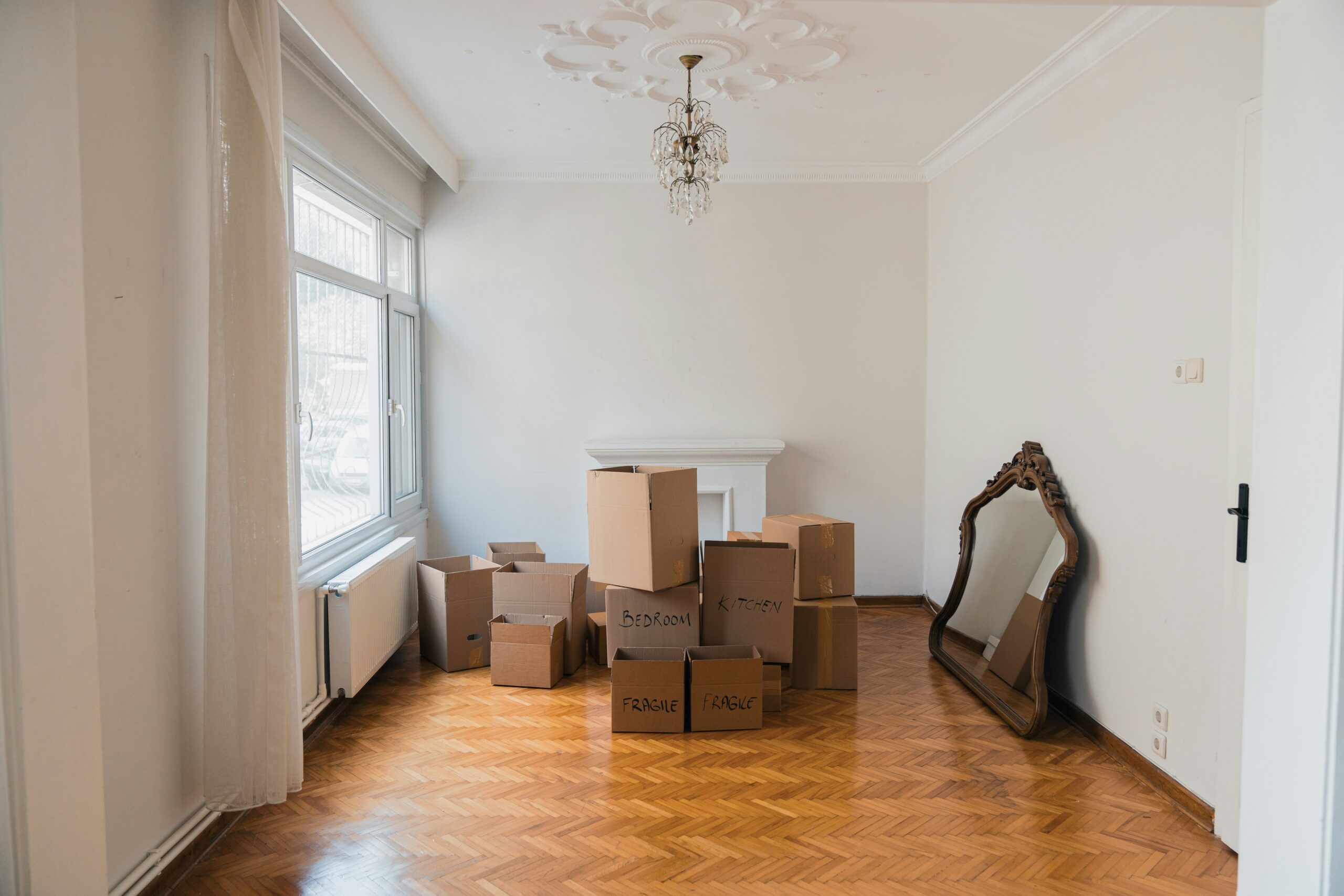
July is peak moving season in Quebec, a period that can quickly become a headache for condominium property managers. How can you ensure that everything goes smoothly? How can you adequately protect your building? We understand your concerns.
Your role is complex: you have to coordinate residents’ comings and goings, supervise the use of common areas, and ensure the building is safe. It’s a real challenge that requires flawless planning! Our experts are here to help you with practical solutions to manage moves in your condominium.
1. The union’s role in managing relocations
How to effectively inform co-owners
Because the vast majority of moves often take place on the same day (ah, the infamous July 1!), it is imperative to have clear and proactive communication with your co-owners. This greatly facilitates the management of moves. Our advice: create a detailed guide with the procedures to follow, including all regulations, expectations, and required documents.
Also, ask co-owners to quickly report their moving dates via an online form (Google Forms is an excellent tool). A standardized form ensures that all essential information is collected: movers’ contact information, desired time slots, and specific needs for the use of common areas. This will also allow you to build a solid moving schedule—keep reading to learn more about this tool.
Don’t forget to request proof of liability insurance from co-owners and movers. This precaution protects the building from potential damage during the move.
Setting up a moving schedule
Organizing moves requires meticulous planning. For your union, a detailed moving schedule is an essential tool for effectively coordinate residents’ movements.
Reserve specific time slots for each move, taking into account the building’s rules and regulations. Our tip: leave a few hours between each departure or arrival to avoid congestion in the parking areas and elevator.
For the more tech-savvy: setting up an online reservation system can simplify the management of requests and the selection of available time slots that you have identified yourself in advance.
Supervising moving companies
Professional movers are your key partners for successful moves. Always ask to see their liability insurance certificate and a copy of their transport permit before they start work in your building.
To protect your condominium, establish clear rules with these companies: strict schedules, designated use of common areas, and mandatory protection of surfaces. A document signed by the mover confirming their understanding of the rules will help avoid misunderstandings.
On moving day: it is essential that a member of your team supervises the operation. Their presence will enable them to react quickly in the event of damage and to document any problematic situations for your insurer. Don’t hesitate to photograph the condition of the premises before and after each move.
2. Protection of common areas during moves
Essential preventive measures
Protecting common areas begins with the strategic installation of appropriate equipment. Consider items such as padded covers for elevators, threshold ramps for moving trucks, corner protectors for exposed edges, and mats to cover high-traffic areas.
Conducting a systematic inspection before and after each move, documented with photos, enhances the safety of the premises. This thorough check, carried out by a member of the board of directors or the manager, effectively prevents potential disputes with the mover’s insurer.
Managing elevator use
Does your condominium declaration regulate elevator use during moves? Some condominium associations restrict or prohibit their use for heavy objects in order to preserve the equipment. Whatever the answer, just make sure your co-owners are aware of and comply with the regulations in force.
As mentioned above, it is good practice to install specific protective measures: rubber mats on the floor, padded covers on the walls. The tenant or owner must also comply with the maximum load allowed and the time slots defined by the regulations.
Moving season is also often the peak season for water damage claims. In fact, claims often arise when appliances are disconnected or reconnected. Don’t hesitate to communicate the building regulations, which should include the requirement for connection by specialists. In the event of water damage or mechanical breakdowns caused during moves, be sure to contact your broker promptly.
Dedicated parking areas
To help your co-owners, you can reserve specific spaces near the entrances for moving trucks, while ensuring that the spaces are for residents’ exclusive use. Please note that some municipalities (such as Montreal) may require a permit to reserve a space for a moving truck.
Always be proactive in your communications with residents: a detailed photo plan showing permitted and non-permitted spaces can prevent conflicts of use, while increased surveillance prevents unauthorized parking.
3. Insurance implications
Changes to report to your insurer
Your broker must be informed of any changes, including major work in common areas, upgrades to mechanical systems, or changes in use, such as a change in commercial premises or a different rental rate.
Short-term rentals by co-owners also deserve special attention. This practice significantly changes the risk profile of your building. A call to your broker will allow you to quickly adjust your coverage and avoid unpleasant surprises when making a claim.
The role of the self-insurance fund
A move that goes wrong can quickly ruin your finances. The self-insurance fund plays a crucial role in covering the deductible in the event of damage to common areas.
Your syndicate must maintain this fund at a level equivalent to the highest deductible in your insurance policy. For example, if your deductible for water damage is $25,000, this amount represents the minimum that must be kept in the fund.
What if a mover accidentally damages the garage door? The self-insurance fund allows you to act quickly without having to make an emergency contribution from the co-owners. Remember to review the amount of the fund with your broker after each incident to maintain optimal management.
4. Establish a relocation allowance
What are the rights related to moving costs?
The condominium rules may provide for reasonable fees to cover moving costs. These fees are used in particular to cover increased surveillance of the premises and protection of common areas during the move.
A condominium association may request a security deposit before the move. This sum, which is refundable after verification that no damage has been caused, should not be confused with a penalty or additional charge.
The declaration of co-ownership must clearly detail these financial terms. Remember to give a copy of the receipts to the co-owners and to document the use of the funds to facilitate the management of any claims.
Calculating the appropriate amounts
How do you determine a fair and reasonable amount for moving costs? A simple formula is to calculate an hourly rate based on the time spent by staff, plus a fixed amount for wear and tear on equipment.
For example, if your janitor spends 3 hours supervising a move at $25 per hour, and you add $50 for the use of protective equipment, you arrive at a total of $125. A security deposit equivalent to this amount provides adequate protection.
Your management fees should also be considered in the equation. A call to your broker will help you determine whether this income should be declared in your insurance policy.
5. Best practices to adopt
Documentation of procedures
Proper documentation of relocation procedures is your best protection against unforeseen events. Keeping a detailed log allows you to track changes made to units during relocations.
Your log should also include any special authorizations granted, such as extended use of an elevator or temporary parking for a truck. Careful tracking of these items helps you maintain traceability.
Incident tracking
The speed of response to incidents during moves can make all the difference. Rigorous tracking begins with the first reported scratch. Document each event with photos and testimonials, noting the exact time and circumstances.
Take the case of an elevator door damaged during a move on a Friday evening. Without immediate documentation, it is impossible to determine whether the damage occurred before or after the movers arrived. However, with time-stamped photos and a detailed incident report, your insurance claim will be processed more efficiently.
Creating a digital incident log makes it easier to share information with your broker and identify trends so you can adjust your preventive measures.
6. In short
Managing moves in condominiums requires careful planning and attention to detail. From setting up an effective schedule to protecting common areas and updating your insurance coverage, every aspect deserves your attention.
Do you have questions about protecting your building or want to review your coverage? Our team of passionate brokers is here to help. Contact us today for personalized advice tailored to your situation.


Contact us